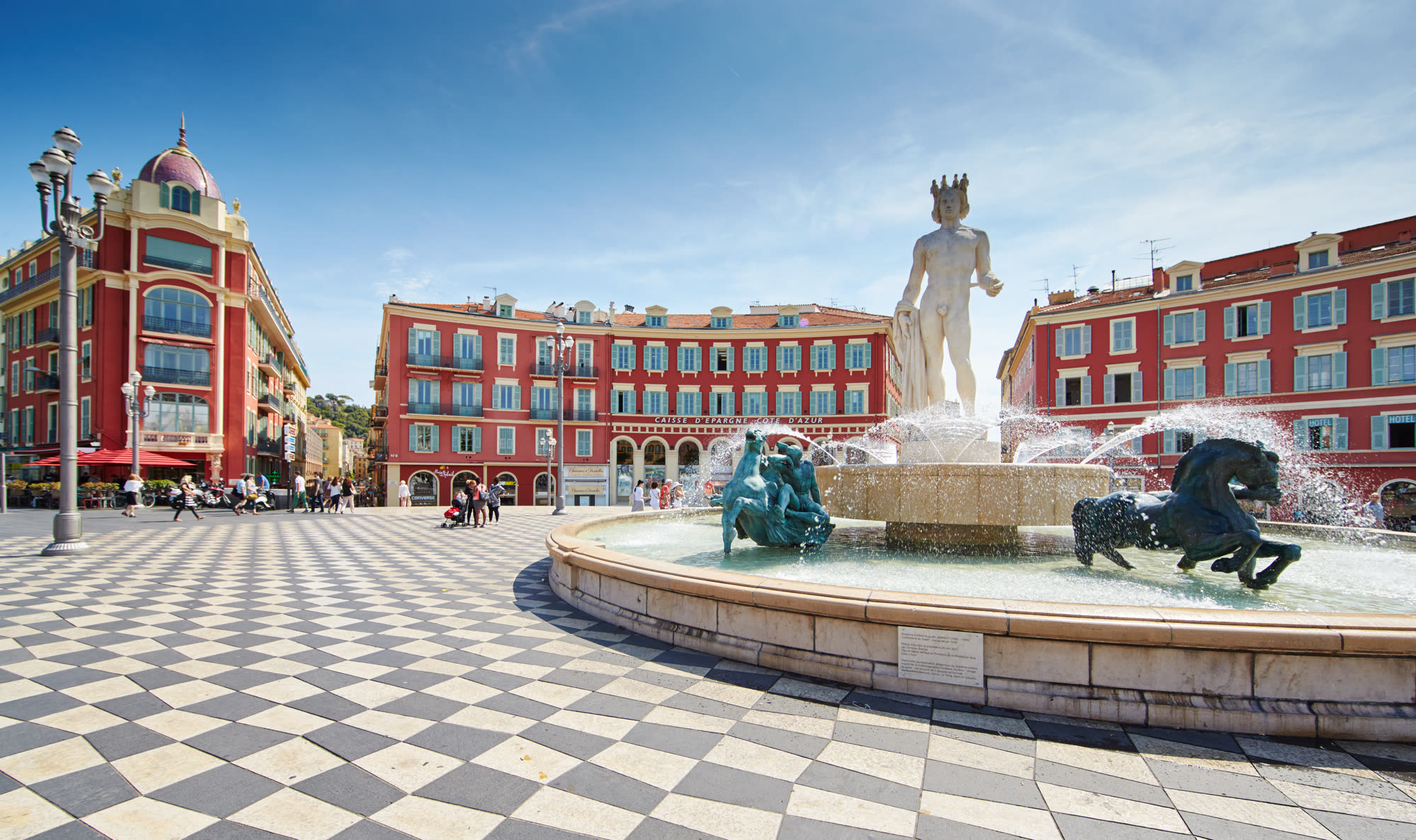
Change of Use in Nice: Renting Out a Second Home in 2026
New rules since 1 September 2026, 5-year permits, quotas, compensation: how Nice's change-of-use regulation affects letting your second home as a short-term rental.
To let a second home as a short-term rental in Nice, a change-of-use authorisation is mandatory from the very first night — and 2026 has been an eventful year: a first regulation in force from 1 January, partially struck down by the courts at the end of January, then a new regulation applicable since 1 September 2026. The headlines: temporary permits now last up to 5 years, only one per tax household, and applications in the four quota districts can be filed from 1 September to 31 December 2026. Here is the complete, step-by-step guide.
Updated 25 September 2026: new change-of-use regulation in force since 1 September 2026.
The rules change frequently — this year more than ever. The information below is accurate at the date of the latest update and provided for guidance only; when in doubt, refer to the official sources listed at the end of this article.
What is a change of use, and who needs one?
A change of use is the administrative authorisation required to convert a residential dwelling to another purpose — in this case, short-term holiday letting. In Nice, a designated high-pressure housing zone, the authorisation is issued by the city under Nice's change-of-use regulation adopted by the Metropolitan Council on 22 June 2026, which applies to applications filed since 1 September 2026.
The essential distinction fits in one sentence: your main home is exempt; a second home never is. If you live in the property at least eight months a year, you may let it without a change of use, capped at 90 days per year in Nice — the classic case of an owner who rents out their house while on holiday. For any other property — second home, buy-to-let flat, inherited apartment — the authorisation is required before the first listing goes live, and it applies per dwelling (a property split into two flats needs two authorisations).
The property itself must meet French decency standards, hold an energy rating (DPE) between A and E, and comply with the building's co-ownership rules, which the owner certifies on their honour.
Do you need a permit to rent out a second home in Nice?
Yes, in every case — but obtaining one is not automatic, and the terms depend on your situation. Since 1 September 2026, a private individual can obtain a temporary authorisation without compensation lasting up to 5 years. It is non-renewable, cannot be transferred to another property, cannot be split over time and cannot be assigned. Above all, it is a one-off: only one temporary authorisation per owner, limited to one per tax household.
Beyond that first authorisation, or once the 5 years are up, two routes remain: compensation (more on this below) or the mixed-letting scheme. Commercial companies (SARL, SAS, EURL and the like) must compensate from their very first property. And if your property sits in one of the city's four most sought-after districts, your application is also subject to an annual quota.
Which districts of Nice are covered by the 2026 quotas?
This is the scheme's headline measure: in four districts — Vieux-Nice (Old Town), Riquier – Port – Mont Boron, City Centre and Nice West — new applications are capped at 691 authorisations in total for 2026. They must be filed exclusively online via the city's dedicated portal (where you can check your property's address), and only between 1 September and 31 December 2026. In these districts, first applications are reserved for private individuals.
| Your situation | Authorisation required | What changes in 2026 |
|---|---|---|
| Main residence | No | Letting capped at 90 days/year |
| Second home outside the quota districts | Yes | Applications accepted year-round |
| Second home in one of the 4 quota districts | Yes | Online filing from 1 September to 31 December 2026, within the 691-permit cap |
| Renewal, mixed letting, compensation, serviced residence | Yes | Exempt from quotas, filed year-round |
Source: Métropole Nice Côte d'Azur, change-of-use regulation (council decision of 22 June 2026), September 2026.
One important nuance: renewals, mixed-letting files (a student tenancy during the academic year, holiday lets in summer — see our guide to mixed student and holiday letting in Nice), applications backed by compensation and serviced residences are exempt from the quotas and can be filed at any time. The cap only targets new stand-alone applications within the four districts.
Within those districts, the rules of the game are strict: complete files are processed in order of arrival (each filing is time-stamped), incomplete files are rejected, and each owner may file only one application, for one property, per filing window. There is no waiting list: if you are turned down, you will need to apply again in the next window.
What has changed since 1 September 2026?
The regulation of 5 December 2025 (council decision no. 4.1) was partially annulled by the Nice administrative court on 29 January 2026, over the way the quotas had been calculated. The Métropole therefore adopted a new change-of-use regulation for the City of Nice — decision no. 2.1 of the Metropolitan Council of 22 June 2026 — which applies to applications filed since 1 September 2026. The main changes:
- Duration extended to a maximum of 5 years for individuals' temporary authorisations, non-renewable, and limited to a single authorisation per owner and per tax household.
- Quotas recalculated: a maximum of 691 authorisations for 2026 across the four districts, with an online filing window from 1 September to 31 December 2026.
- A defined review period: the City has 4 months from the filing of a complete application; if it has not responded by then, silence means refusal.
What if you already hold an authorisation? Previously granted authorisations remain valid until their maximum term. Three-year authorisations filed between 1 January and 31 August 2026 can benefit from a single 2-year renewal, to be requested within the 2 months before expiry — no renewal is possible if the request is made after expiry. Annual authorisations filed between 1 December 2024 and 31 December 2025 can, if renewed on time, run for up to 6 years from the initial decree. Our advice: note your authorisation's expiry date now, because a missed renewal cannot be put right.
One point to watch for main residences: Nice capped their letting at 90 nights a year (city council resolution of 23 May 2025, applicable since 1 January 2026), while the Métropole's pages now refer to a change-of-use exemption of up to 120 days a year. Until this is clarified, we recommend planning on 90 nights and obtaining written confirmation from the City.
How does compensation work?
Compensation is the most misunderstood part of the system. The principle: to withdraw a dwelling from the residential market, you must "give back" another one. In practice, this means converting into housing a Nice property currently used for another purpose — an office, shop or warehouse — which has not served as housing during the reference periods set by the regulation, and has never been used as compensation before.
You do not need to own such premises yourself: you can purchase commerciality titles ("titres de commercialité") from a third party that converts commercial premises into homes, for an equivalent floor area. Prices are unregulated and the market is discreet, which in practice reserves this route for substantial investment projects. In return, compensation gives you a permanent authorisation attached to the property, which passes to the buyer if you sell. Before taking any step, an appointment with the City's housing protection unit (Mission Protection des Logements) is mandatory.
For the owner of a single property, the 5-year temporary authorisation remains the standard path; for a second property, or once those 5 years are up, long-term letting or mixed student and holiday letting often deserve a serious comparison.
How do you file an application, step by step?
The process is handled online, via the changementdusage.fr/nice portal. In order: check your property's address (the site tells you whether you are in a quota district), gather the documents (title deed, DPE rated A to E, sworn statement of compliance with the co-ownership rules), file the application — between 1 September and 31 December 2026 if you are in a quota district, year-round otherwise — then wait for it to be processed by the City of Nice's housing protection unit. In the quota districts, filing is online only, and no application is accepted by simple e-mail. Take care over every document: incomplete files are rejected, and the review can take up to 4 months from a complete file, with no response counting as a refusal.
Once the authorisation is granted, you are not quite done: you still need the 13-character registration number — separate from the change of use — displayed on every listing, plus the tourist tax declaration. This entire administrative chain is what we take care of for owners who entrust their property to us in Nice: our team prepares, files and tracks every application, renewals included.
What are the risks of letting without authorisation?
The penalties are severe, and enforcement is real: sworn municipal officers carry out home inspections, and recorded offences are passed to the public prosecutor. Letting a second home without a change of use exposes you to a civil fine of up to €50,000 per dwelling, plus a court-ordered penalty of up to €1,000 per day and per square metre until the situation is regularised. False declarations or concealment add criminal penalties: up to one year's imprisonment and an €80,000 fine.
None of this is insurmountable: tens of thousands of holiday rentals operate perfectly legally on the French Riviera, and professional short-term rental management starts precisely with a compliant file. If you are considering letting your second home, have your property and its regulatory position assessed first: it is free of charge, and it prevents unpleasant surprises.
Official sources
- Métropole Nice Côte d'Azur — tourist furnished rentals (rules in force since 1 September 2026: 5-year permit, quotas, compensation, penalties)
- Public notice — 2026 quota districts map — PDF, in French (boundaries of the 4 quota zones, 691 permits, filing from 1 September to 31 December 2026)
- Métropole Nice Côte d'Azur — mixed letting, in French (conditions of the student + holiday letting scheme)
- City of Nice change-of-use portal (address eligibility check and online filing)
- Official change-of-use FAQ (the Métropole's answers to specific cases)
Frequently asked questions
Do I need a change of use to rent out my main home in Nice?
No. If the property is your main residence — meaning you live there at least eight months a year — you are exempt from the change-of-use authorisation. Nice caps holiday letting of a main home at 90 days per year (city council resolution of 23 May 2025, applicable since 1 January 2026), although since September 2026 the Métropole's pages refer to an exemption of up to 120 days. Until this is clarified, we recommend planning on 90 nights and obtaining written confirmation from the City. You must still obtain a registration number to display on your listing and collect the tourist tax.
How long does a change-of-use authorisation last in Nice?
For applications filed since 1 September 2026, an individual's temporary authorisation lasts up to 5 years. It cannot be renewed, transferred to another property or assigned, and it is limited to one per tax household. Once it ends, the options are compensation or mixed letting. Earlier authorisations remain valid until their maximum term; three-year authorisations filed between 1 January and 31 August 2026 can be renewed once for 2 years, provided the request is made within the 2 months before expiry.
Can I still file an application in 2026?
Yes. In the four quota districts (Vieux-Nice, Riquier – Port – Mont Boron, City Centre, Nice West), new applications can be filed online only at changementdusage.fr/nice, from 1 September to 31 December 2026, within a cap of 691 authorisations. Complete files are processed in order of arrival, and there is no waiting list. Everywhere else in Nice — and for renewals, mixed letting and compensation-backed files — applications remain open year-round.
What is a commerciality title?
It is a compensation right purchased from a third party that converts non-residential premises (offices, shops) into housing in Nice, for an equivalent floor area. By acquiring it, you "compensate" for the dwelling you are withdrawing from the residential market to let as a holiday rental, and obtain a permanent authorisation attached to the property, which passes to the buyer on sale. Prices are unregulated and often high, which in practice reserves compensation for substantial investment projects.
What are the penalties for letting a second home without authorisation?
A civil fine of up to €50,000 per illegally converted dwelling, a court-ordered penalty of up to €1,000 per day and per square metre until the breach is remedied, and criminal penalties (up to one year's imprisonment and an €80,000 fine) for false declarations. Home inspections by sworn officers do take place in Nice.
Does the change of use replace the registration number?
No — for a second home they are two separate, cumulative procedures. The change of use authorises converting the dwelling into a holiday rental; the 13-character registration number, obtained afterwards, must appear on every published listing. It is generated on the Métropole Nice Côte d'Azur tourist tax portal, pending the national portal planned by the Le Meur law, whose roll-out has been delayed.