Where to Stay in Cannes: Which Area Is Right for You?
Where to stay in Cannes? La Croisette, Le Suquet, the Carré d'Or or La Bocca: a local guide to choosing the right area for your trip and your budget.
Where to stay in Cannes? For a first seaside visit, aim for La Croisette or the Carré d'Or; for the character and the restaurants of the old town, choose Le Suquet; for quiet family days and proper beaches, Pointe Croisette; and if you want more space for the same budget, look at La Bocca, Croix-des-Gardes or Le Cannet. The centre takes twenty minutes to cross on foot, and yet every area tells a different version of the city. Here is our neighbourhood-by-neighbourhood guide, written from the French Riviera.
How is the city laid out?
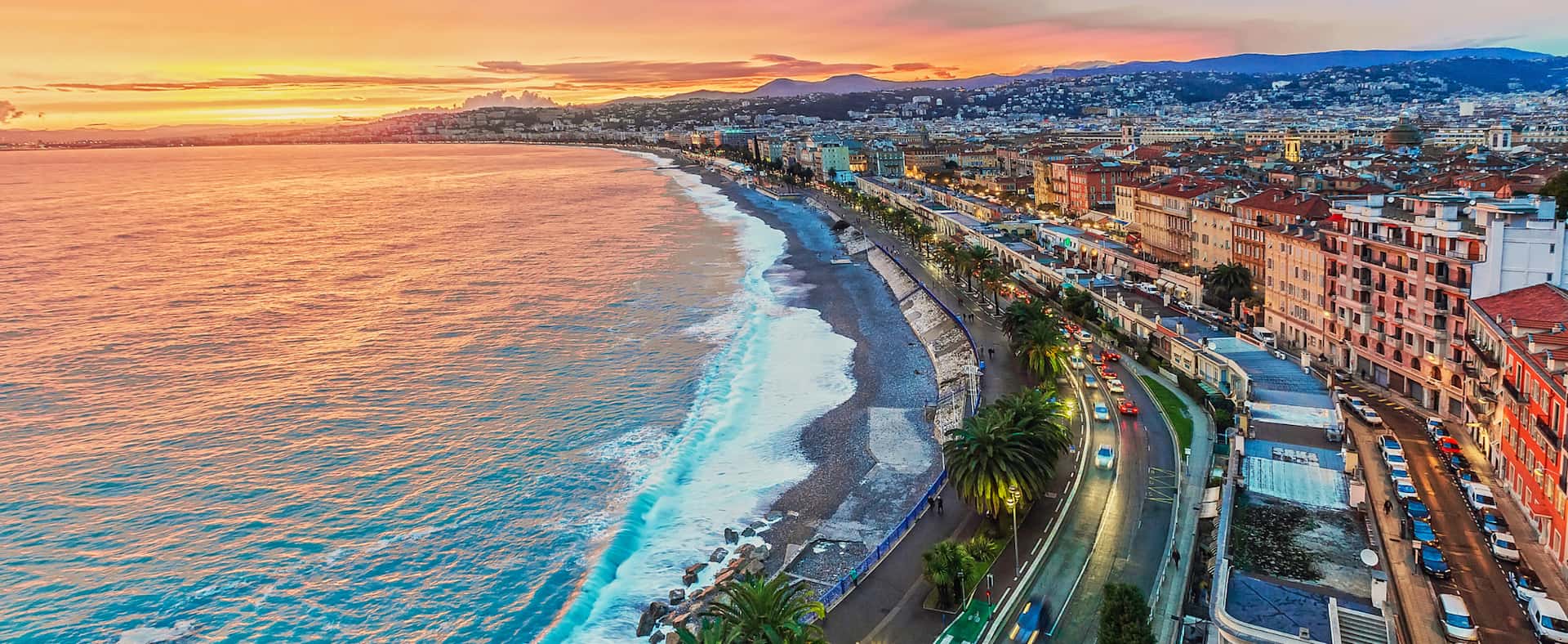
Everything starts at the water. Running east to west, the Boulevard de la Croisette unfolds its palm-lined promenade from Pointe Croisette to the Palais des Festivals. One street back, Rue d'Antibes runs parallel as the main shopping artery, and between the two sits the Carré d'Or, a handful of streets full of boutiques and good tables. West of the Palais, the Old Port sits below the hill of Le Suquet, which looks out over the bay; further west still, the coast continues towards La Bocca, facing the Estérel hills. To the east, beyond Port Pierre Canto, Pointe Croisette and Mouré Rouge turn residential. Higher up, the city climbs towards Croix-des-Gardes to the west and Le Cannet to the north, greener and quieter.
Useful to know when planning: the railway station sits right in the centre, five minutes' walk from Rue d'Antibes, and the Lérins Islands lie just 700 metres off the tip of the Croisette.
Which area of Cannes suits your trip?
| Area | Atmosphere | Best for | Summer nightly budget |
|---|---|---|---|
| La Croisette | Grand hotels, private beach clubs, the famous promenade | First visits, sea views, special occasions | High to very high |
| Carré d'Or & Rue d'Antibes | Shopping, restaurants, everything on foot | Couples, city breaks, short stays | High |
| Le Suquet & Forville | Cobbled lanes, the market, views over the bay | Character lovers, food lovers | Mid to high |
| Station & centre | Practical, lively, car-free | Car-free trips, stopovers, measured budgets | Mid |
| Pointe Croisette & Mouré Rouge | Residential, family beaches, quiet evenings | Families, longer stays, remote working | Mid to high |
| Croix-des-Gardes & Le Cannet | Hills, greenery, panoramic views | Villas with pools, groups, car useful | Mid |
| La Bocca | Sandy beaches, neighbourhood life, better value | Families, week-long stays, tighter budgets | Moderate |
Indicative guidance based on our local knowledge and our own portfolio — Be My Guest, 2026. Rates vary widely with the season and the trade-show calendar.
La Croisette and the Carré d'Or: the Cannes you picture
This is the postcard, and it delivers: a palm-lined promenade, the grand hotels, the concession beaches with their neat rows of loungers, and the Palais des Festivals at the far end. Staying on or just behind the Croisette means opening your shutters onto the bay and walking to both the morning market and dinner.
The Carré d'Or, between the Croisette and Rue d'Antibes, offers the same location with a little more everyday life and slightly gentler rates. It is our default recommendation for a first two- or three-night stay: you walk everywhere, you need no car at all, and you are ten minutes on foot from Quai Laubeuf and the island ferries.
The trade-off: this is the most expensive part of town, and the liveliest on summer evenings. If you are a light sleeper, choose an address one street back, or a room facing the courtyard.
Le Suquet: old Cannes, up on the hill
Le Suquet is the former fishing village perched on its hill west of the Old Port. Flower-lined staircases climb to the Mont Chevalier tower and the church of Notre-Dame d'Espérance, where the view takes in the whole bay and the islands. Its lanes hold the city's densest concentration of restaurants — this is where Cannes goes for dinner.
At the foot of the hill, Marché Forville is a local institution: a Provençal food market from 7am to 1pm, Tuesday to Sunday between September and June and every day in July and August, with an antiques market on Mondays from 8am to 4pm the rest of the year. The market has been undergoing major renovation works since 2024, with some producers trading under the Allées de la Liberté hall — check where the stalls are before you set off with your basket. Staying a few steps away means picking up fruit and fish each morning: one of the real advantages of an apartment over a hotel room.
Worth knowing: it is steep, and the streets are cobbled. With heavy luggage or a pushchair, check the floor and the distance from the drop-off point.
Around the station and Rue d'Antibes: the practical choice
Less photogenic, this is the area we most often recommend to travellers arriving without a car, or using Cannes as a base for the wider Riviera. Trains reach Nice in around thirty minutes and Antibes in about fifteen, with the whole coastline as far as Monaco within easy reach. The streets running back from Rue d'Antibes are lined with handsome older buildings offering generous proportions at gentler rates than the seafront, and the beach is still five minutes away on foot.
Pointe Croisette and Mouré Rouge: family Cannes
Past Port Pierre Canto, the Croisette leaves the palaces behind for a residential district lined with public beaches along Boulevard Eugène Gazagnaire. This is where you will find Bijou Plage, fitted out each summer as a Handiplage so that visitors with reduced mobility can swim safely, and it is from here that the Lérins Islands look their best.
Evenings are markedly quieter, local shops cover daily needs, and apartments tend to be larger and to come with terraces. For a family week or a multi-week remote-working stay, this is our favourite corner of the city.
Croix-des-Gardes, Le Cannet and La Bocca: more space for the same money
On the western heights, the Croix-des-Gardes forest park offers greenery and villas with pools and sea views. Le Cannet, immediately above Cannes, has kept its old village, its galleries and the Bonnard museum, along with superb panoramas over the bay. These areas assume a car or the local buses, but for the same budget they let you rent considerably more space.
La Bocca, to the west, is the fastest-changing part of the city. Its long sandy beaches along Boulevard du Midi-Louise Moreau — including Plage des Rochers, where red Estérel rocks sit straight on the sand — are among the most enjoyable in the commune, and rates remain noticeably lower than in the centre. All of it minutes from Mandelieu-la-Napoule and its golf courses.
Where can you swim in Cannes?
The Cannes shoreline has 7.6 kilometres of beach across 15 kilometres of coast, including 13 public beaches, one municipally run beach (Plage Zamenhof, on the Croisette) and 33 concession beaches — the ones where you hire a lounger and parasol. In other words, contrary to a persistent myth, you can swim very happily in Cannes without spending a euro, particularly at the Midi and La Bocca beaches to the west, or at Mouré Rouge to the east.
And for the best swimming of all, take the ferry from Quai Laubeuf: fifteen minutes to Sainte-Marguerite and its turquoise coves, twenty minutes to Saint-Honorat and its Cistercian abbey. Two car-free islands a quarter of an hour from the Croisette — the finest day trip Cannes has to offer.
When should you visit Cannes, and when should you book?
Cannes runs on two calendars: the beach season from May to September, and the trade-show season, which pushes prices well beyond summer levels. The dates announced for 2027 are MIPIM from 15 to 19 March, the Cannes Film Festival — its 80th edition — from 11 to 22 May, Cannes Lions from 21 to 25 June and MIPCOM from 18 to 21 October. During those weeks accommodation is sometimes booked a year ahead and rates can be three to five times the norm, or higher.
Our advice: if you are coming on holiday, aim for June or September — warm sea, a city that can breathe, gentler prices. If you are coming for a trade show, book as soon as the dates are published, and look at well-connected outlying areas too. To plan around the wider Riviera calendar, our guide to the French Riviera's major events lists the key dates in Nice, Cannes and Monaco.
Apartment or hotel in Cannes?
For a night or two, a hotel keeps its advantages. Beyond three nights, an apartment changes the nature of the trip: a kitchen so you can make the most of Marché Forville, a living room for the evenings, a terrace, and a much lower cost per person for families and groups. That is especially true in Cannes, where seafront dining is expensive in high season.
At Be My Guest we manage around fifty properties across the French Riviera, with a guest rating of 4.8/5 over the past five months and more than 10,000 guests welcomed. Every apartment is visited, prepared and maintained by our own local team, with hotel-quality linen and support available seven days a week. Browse our rentals or our dedicated Cannes holiday rentals page to find your address — booking directly, with no platform fees. And if you are still weighing Cannes against the Riviera capital, our guide to the best areas to stay in Nice will help you decide.
Official sources
- City of Cannes — Beaches (number of public, municipal and concession beaches, Handiplage, lifeguarding and water quality)
- City of Cannes — Marché provençal Forville (days, opening hours and current renovation works at Marché Forville and the Monday antiques market)
- City of Cannes — The Lérins Islands (access, ferries and practical information for Sainte-Marguerite and Saint-Honorat)
- City of Cannes — Parking in Cannes (public car parks, rates and city-centre parking)
- Festival de Cannes — official site (official dates and programme for each edition)
- Zou! — line 81, Nice Airport ↔ Cannes (timetables and stops for the motorway coach from the airport)
Frequently asked questions
What is the best area to stay in Cannes?
There is no single answer, but there is an area for each type of trip. For a short first visit, the Carré d'Or and La Croisette offer the best compromise: everything is walkable, beaches and the Palais des Festivals included. For character, cobbled lanes and restaurants, choose Le Suquet. For a family week, Pointe Croisette and Mouré Rouge are quieter and lined with public beaches. And to rent something larger for the same budget, look at La Bocca, Croix-des-Gardes or Le Cannet, five to fifteen minutes from the centre.
How much does a stay in Cannes cost in summer?
Rates vary widely depending on the area and the date. In July and August, a well-located apartment for four typically costs several hundred euros a night on La Croisette, and considerably less in outlying areas such as La Bocca. The single biggest factor is the calendar: during the Cannes Film Festival or a major trade show, prices can be five to ten times an ordinary week. Travelling outside those periods, or booking far ahead, remains the most effective way to save.
Do you need a car in Cannes?
Not if you stay in the centre. The station is five minutes' walk from Rue d'Antibes, trains reach Nice in around thirty minutes and Antibes in about fifteen, and the number 81 coach connects Nice Airport via the motorway in roughly 45 to 50 minutes. Parking is expensive and scarce in summer, which makes a car more of a burden than a help in town. It does become useful if you are staying up in the hills (Croix-des-Gardes, Le Cannet) or planning to explore the back country and the Estérel.
Are there free beaches in Cannes?
Yes. Of the beaches along the 7.6 kilometres of Cannes shoreline, thirteen are public, with free access and lifeguards during the summer season — notably the Midi and La Bocca beaches to the west, and the Mouré Rouge beaches along Boulevard Eugène Gazagnaire to the east. One municipally run beach, Plage Zamenhof on the Croisette, offers loungers at lower rates than the concession beaches. The coves of the Lérins Islands, fifteen minutes away by ferry, are also free to access.
How do you get to the Lérins Islands from Cannes?
Ferries leave from Quai Laubeuf, at the far end of the Old Port, about ten minutes' walk from the Palais des Festivals. Allow fifteen minutes' crossing to Sainte-Marguerite, the larger island, known for its coves and for the fort where the Man in the Iron Mask was held, and twenty minutes to Saint-Honorat, where a community of Cistercian monks still tends the vineyards. Departures run throughout the day in season; there are no cars and no accommodation on the islands, so bring water and a picnic.
Where should you stay in Cannes during the Film Festival?
During the festival — the 80th edition announced for 11 to 22 May 2027 — the centre is saturated and rates reach their annual peak. If you need to be within walking distance of the Palais des Festivals, book as soon as the dates are announced, often close to a year ahead. Otherwise, well-connected areas offer far better value: La Bocca, Le Cannet, or even neighbouring towns on the train line such as Mandelieu-la-Napoule, Juan-les-Pins and Antibes, a quarter of an hour by rail from central Cannes.