Things to Do in Villefranche-sur-Mer (and Where to Stay)
Things to do in Villefranche-sur-Mer: the citadel, Cocteau's chapel, Rue Obscure, Marinières beach — plus our local tips on where to stay in the bay.
Wondering about the best things to do in Villefranche-sur-Mer? Wander one of the loveliest old towns on the French Riviera, step inside the chapel painted by Jean Cocteau, climb up to the Saint-Elme citadel, then end the day with your feet in the water at Marinières beach — all just ten minutes from Nice by train. This little harbour town on the bay is one of our favourite destinations, and one of the Riviera's best-kept secrets. Here is our complete guide, including our local advice on where to stay.
Why is the bay of Villefranche so famous?
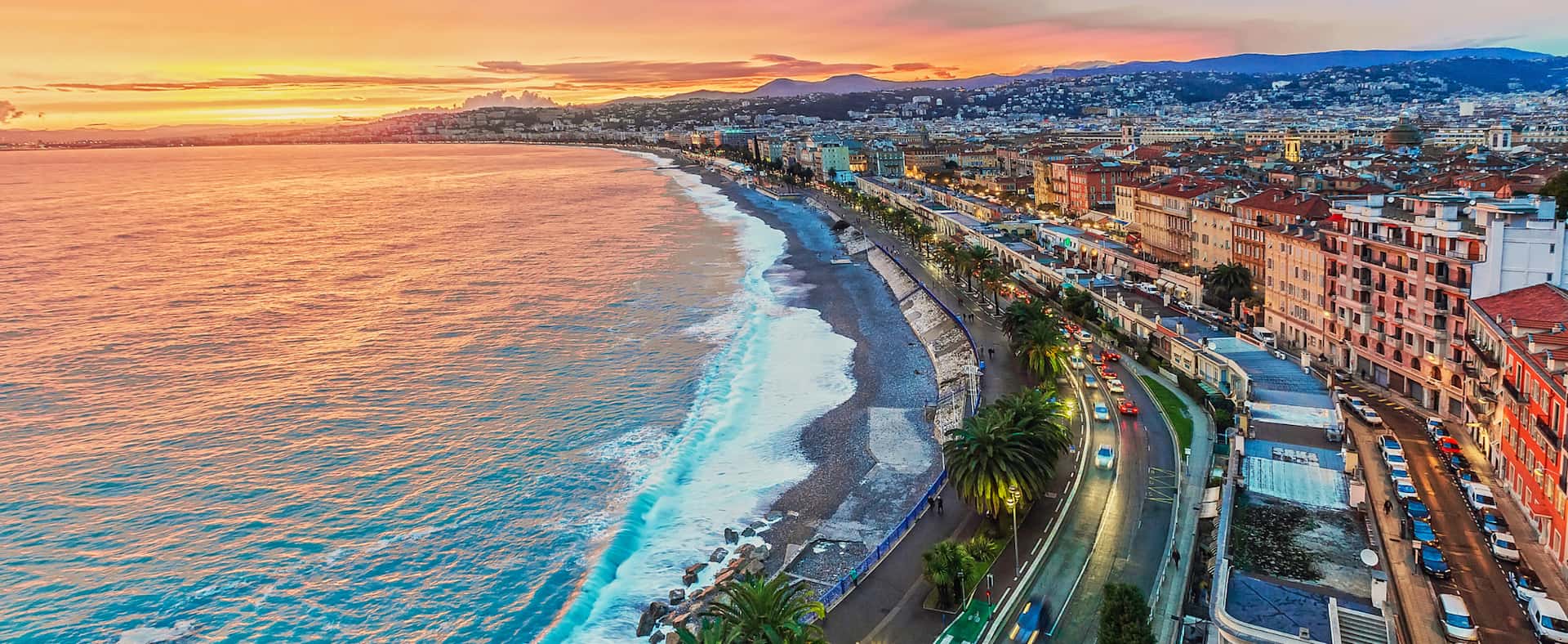
The bay of Villefranche-sur-Mer is one of the deepest natural harbours in the Mediterranean: around 17 metres on average, plunging to some 95 metres at its deepest point. For centuries this made it an exceptional natural anchorage — cruise ships still drop anchor opposite the old town, their passengers coming ashore by tender. Sheltered by Cap de Nice on one side and the Saint-Jean-Cap-Ferrat peninsula on the other, the bay enjoys water that is often calmer and clearer than anywhere else along the coast. At sunset, when the ochre and terracotta façades catch fire above the water, you understand why so many painters and film-makers fell in love with the place.
What to see in the old town?
Villefranche's old town is best explored on foot, and it is a delight. From Quai de l'Amiral Courbet and its seafront restaurants, head up Rue du Poilu, the main street lined with small shops and colourful façades. Don't miss:
- Rue Obscure, a fully covered street 130 metres long whose layout dates back to the 13th century. A vaulted passage, cool stone, scarce light: it feels like a film set — Jean Cocteau actually filmed here.
- The Chapelle Saint-Pierre on the harbour, decorated from floor to ceiling by Jean Cocteau in 1957 and dedicated to the village's fishermen. An intimate gem with a token entrance fee (closed early in the week — check opening times before your visit).
- Place Amélie Pollonnais and its café terraces beneath the plane trees, perfect for a coffee facing the boats.
Allow half a day to take it all in at a gentle pace, or a full day if you add the beach and the citadel.
The Saint-Elme citadel, a 16th-century fortress by the sea
You can't miss it: the Citadelle Saint-Elme, built in the 16th century by the House of Savoy to protect the bay, still watches over the harbour entrance. Cross the bridge over the moat and you'll find gardens, the town hall and several small museums within the ramparts, including one devoted to the sculptor Volti, a son of the town. The ramparts offer superb views over the bay — an ideal late-afternoon stroll, when the light skims the stone walls.
Where to swim in Villefranche-sur-Mer?
Plage des Marinières is Villefranche's main beach: almost a kilometre of sand and fine gravel at the head of the bay, calm, translucent water sheltered from the open sea, and a wonderful view of the old town. It's just a few minutes' walk from the railway station — a rare luxury on the French Riviera. Families love its gentle slope; swimmers, the clarity of the water. More confidential, the Darse — the former 18th-century royal port, now a marina — hides lovely swimming spots along its rocky edges on the Cap de Nice side.
What walks are there around the bay?
Villefranche is a dream base for walkers. The coastal path (sentier du littoral) links Nice to Villefranche around Cap de Nice, roughly an hour and a half's walk with the sea at your side. Across the bay, the Saint-Jean-Cap-Ferrat peninsula unrolls its coastal trails among pine trees and legendary villas, while Beaulieu-sur-Mer and its Villa Kérylos are only minutes away. By train, the whole coastline is within reach: around fifty daily connections to Nice (under 10 minutes) and on to Monaco.
When is the best time to visit Villefranche-sur-Mer?
Every season has its charm. In summer the bay lives to the rhythm of swims and evenings on the quays — it's high season, so book early. Spring and autumn offer ideal mild weather for sightseeing and walking, with gentler prices. In February, the Combat Naval Fleuri, a tradition born in 1902, turns the bay into a flower battle aboard decorated pointus — one of the Riviera's oldest and most photogenic festivals, held during the Nice Carnival season. To plan your dates around the Riviera calendar, see our guide to the French Riviera's major events.
Where to stay in Villefranche-sur-Mer?
Accommodation here is deliberately limited — that's precisely what preserves the town's charm — and the best addresses go quickly. Three areas stand out:
| Area | Atmosphere | Best for |
|---|---|---|
| Old town & quays | Colourful lanes, restaurants, everything on foot | Couples, first visits, car-free stays |
| Marinières & the station | Facing the beach, quiet in the evening | Families, beach lovers |
| Corniches & hillsides | Villas with sweeping views over the bay | Special-occasion and longer stays |
Indicative guide based on our local knowledge and portfolio — Be My Guest, 2026.
In the old town and along the quays, you live inside the postcard — at the price of a little evening buzz in summer. By the Marinières, you cross the road to lay down your towel, and the station next door lets you explore car-free. Up on the hillsides and corniches, villas and apartments with terraces offer unforgettable panoramas over the bay — in summer, our properties there typically achieve nightly rates of around €200 to €350 depending on the view and amenities.
Indicative ranges for comparable properties in the BMG portfolio in Villefranche-sur-Mer, summer 2026.
Our team is based in Nice, fifteen minutes from the bay: we know every corner street by street and hand-pick homes that we prepare with hotel-level care. Browse our rentals or our dedicated page on holiday rentals in Villefranche-sur-Mer to find your home by the bay — booking direct, with no platform fees. And if you're still weighing it up against its big neighbour, our guide to the essential things to do in Nice will help you plan the perfect stay.
Frequently asked questions
How long do you need to visit Villefranche-sur-Mer?
Half a day covers the essentials: the old town, Rue Obscure, Cocteau's Chapelle Saint-Pierre and the Saint-Elme citadel are all within a few minutes' walk of each other. Allow a full day if you add a swim at Marinières beach, and a weekend if you want to explore the nearby Saint-Jean-Cap-Ferrat peninsula and Beaulieu-sur-Mer. Many of our guests make it their base for a whole week: the railway station lets you explore the entire coastline without a car.
How do you get from Nice to Villefranche-sur-Mer?
The train is the simplest option: around 50 regional (TER) services a day, with a journey time of 7 to 10 minutes from Nice-Ville station, and Villefranche's station is a five-minute walk from Marinières beach and the old town. Walkers can also take the coastal path around Cap de Nice, a scenic hike of about an hour and a half beside the sea. By car, count fifteen minutes along the Basse Corniche, though parking is limited in high season.
What is the best beach in Villefranche-sur-Mer?
Plage des Marinières is Villefranche's emblematic beach: nearly a kilometre long at the head of the bay, with calm, remarkably clear water protected by the harbour, a gentle slope that families appreciate, and a direct view of the old town's colourful façades. It's a few minutes' walk from the railway station. For a more secluded feel, the rocky edges of the Darse, on the Cap de Nice side, hide lovely swimming spots favoured by locals.
When does the Combat Naval Fleuri take place?
The Combat Naval Fleuri is held every year on a Monday in February, during the Nice Carnival period. Born in 1902, this unique tradition sees pointus — the traditional fishing boats — parade across the bay covered in thousands of fresh flowers, which the crews throw to the crowd. It is one of the oldest events on the French Riviera and a wonderfully photogenic way to discover Villefranche out of season, in the mildness of the Riviera winter.
Where should you stay in Villefranche-sur-Mer without a car?
Choose the old town, the quays or the area around the station and Marinières beach: everything is walkable, from the beach to the restaurants, and the TER station connects you to Nice in under 10 minutes — and to Monaco and Menton in the other direction. That is one of Villefranche's great strengths: a storybook destination where a car is simply unnecessary. Homes up on the corniches, magnificent for their views, do require a vehicle or the occasional taxi.
Is Villefranche-sur-Mer better than Nice for a stay?
It depends on what you're after: Villefranche offers the charm of a fishing village, a sublime bay and precious calm, while Nice brings buzz, museums and an unrivalled restaurant scene. The good news: just 10 minutes apart by train, you can easily enjoy both. Guests looking for authenticity and serenity often choose Villefranche as their base, with daily escapes to Nice, Monaco or Saint-Jean-Cap-Ferrat.